

Experiencing sudden draw resistance or burnt hits from hardware that cannot keep up with high-viscosity cannabis oil remains a major headache. Hardware failure before consuming full oil capacity wastes both material and money. High-capacity devices often struggle with coil degradation long before reaching the bottom of the tank.
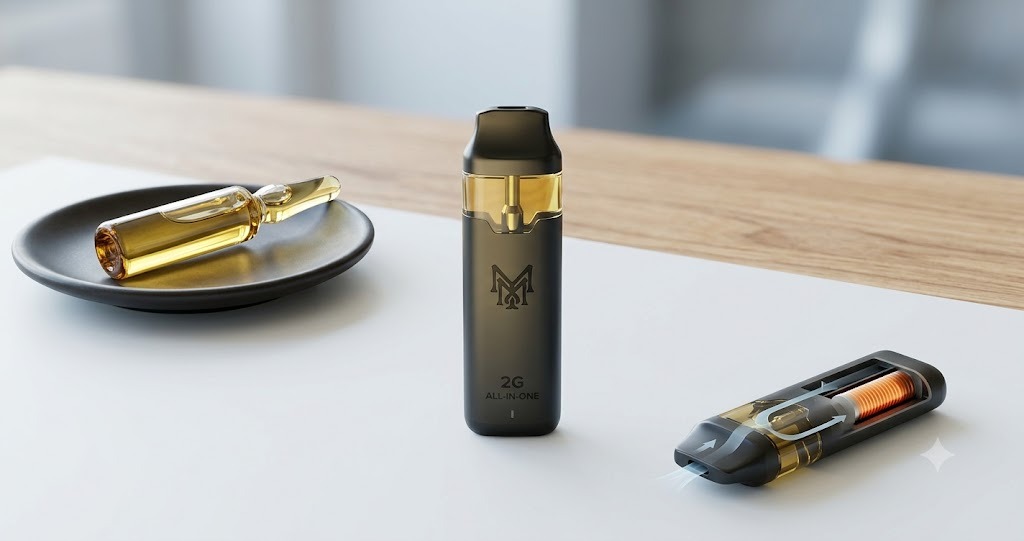
Understanding the internal hardware of the Muha Meds 2G All-In-One: Capacity, Airflow, and Specs Breakdown muha meds 2g resolves these reliability issues through optimized thermal distribution and dual intake channels. Standard 1000mg hardware often fails when scaled up, but engineered 2000mg hardware manages viscosity through precise voltage output and ceramic porosity. Modern extraction technology pairs premium botanical and cannabis-derived terpenes with high-potency distillate, requiring specialized heating elements. The 2026 iteration of the 2g hardware addresses historic clogging points while ensuring total oil consumption through an updated USB-C charging circuit. Discover how the physical architecture, air channels, and battery profile work together to deliver a premium user experience from first pull to last.
What Are the Core Specifications of the Muha Meds 2G Hardware?
The technical framework of the Muha Meds 2G All-In-One: Capacity, Airflow, and Specs Breakdown muha meds 2g centers on balancing high-capacity storage with reliable power delivery. The device integrates a high-density lithium-ion cell with a custom ceramic heating chamber designed specifically for thick, uncut extracts.
+-------------------------------------------------------------------+
|                  MUHA MEDS 2G SPECIFICATION OVERVIEW               |
+-------------------+-----------------------------------------------+
| Reservoir Volume  | 2.0 Milliliters (2000mg net weight)           |
| Battery Capacity  | 280mAh - 350mAh integrated rechargeable cell  |
| Heating Element   | Medical-grade porous ceramic coil (1.4 Ohm)   |
| Charging Interface| Type-C USB (Bottom-mounted charging port)     |
| Activation Type   | Auto-draw / Inhalation activated sensor       |
+-------------------+-----------------------------------------------+
The reservoir holds exactly 2.0 grams of extract, maintaining structural integrity through food-grade polycarbonate internal walls. Powering the system is a regulated cell that output continuous voltage without spiking, preventing coil scorching. Internal wiring utilizes isolated conduits, preventing short-circuits during charging phases.
To verify product authenticity and explore hardware iterations, consult the official guide on
How Does the 2G Reservoir Capacity Impact Usability?
Managing a full 2000mg reservoir requires robust internal hardware to prevent thermal breakdown of terpenes over long periods. Smaller devices process oil quickly, but 2g reservoirs store oil longer while enduring repeated heating cycles.
+-------------------------------------------------------------------+
|                    CAPACITY COMPARISON MATRIX                      |
+----------------------+--------------------+-----------------------+
| Hardware Metric      | Standard 1G Units  | Muha Meds 2G Hardware |
+----------------------+--------------------+-----------------------+
| Total Capacity       | 1.0mL / 1000mg     | 2.0mL / 2000mg        |
| Estimated Draws      | 250 - 300 draws    | 500 - 600 draws       |
| Chamber Heating Area | Standard micro-bore| Expanded surface area |
| Clog Frequency Rate  | Moderate to high   | Low (Dual airway)     |
+----------------------+--------------------+-----------------------+
The 2000mg fluid volume reduces plastic waste and device disposal frequency by half compared to standard single-gram options. Thick botanical extracts require larger intake apertures around the base of the ceramic core. The double-capacity chamber relies on four 1.5mm intake holes to keep the internal wick saturated without flooding the central airflow tube.
For detailed strain profiles and terpene options available in this hardware configuration, browse the comprehensive
How Does Dual-Airflow Technology Eliminate Clogging?
The hardware inside the Muha Meds 2G All-In-One: Capacity, Airflow, and Specs Breakdown muha meds 2g addresses oil blockage using a dual-path intake channel. Traditional single-pipe disposables lock up when cooled oil settles in the center column.
Primary Air Intake (Top Vent)
          │
          ▼
   ┌──────────────┐
   │ Sensor Valve │ ──► Direct Air Flow (Clears Condensation)
   └──────────────┘
          │
          ▼
Secondary Air Intake (Base Vent)
          │
          ▼
   ┌──────────────┐
   │ Ceramic Chamber│ ──► Vaporization Zone (1.4 Ohm Coil)
   └──────────────┘
The dual-airway setup routes incoming air through two distinct pathways:
-
Primary pathway draws directly past the ceramic element to vaporize concentrate.
-
Secondary auxiliary channel routes fresh air around the chamber, relieving pressure buildup and clearing lingering vapor condensation.
This pressure relief system prevents vacuum locks inside the liquid tank. Cool air entering through secondary vents reduces internal heat buildup during extended pulls, protecting delicate terpene profiles from thermal degradation.
To understand the core technology behind these hardware innovations, read the background context in
Why Ceramic Heating Coils Matter for Viscous Oils
Ceramic cores distribute heat across a broader surface area than legacy wire-and-wick designs. The porous ceramic material absorbs dense oils steadily, preventing dry hits.
  [Liquid Extract Tank]
         │  │  │  (Gravity Feed)
         ▼  ▼  ▼
  [Porous Ceramic Core]  <-- Constant micro-saturation
         │  │  │
    [Internal Ni-Cr Core] <-- Controlled 3.2V heating
         │  │  │
         ▼  ▼  ▼
     [Vapor Stream]
Maintaining uniform micro-porosity ensures smooth fluid transfer through every draw cycle. This design prevents oil pooling while protecting flavor profiles from start to finish.
What Power Specs Drive the Internal Battery Architecture?
The battery circuit in the Muha Meds 2G hardware maintains a steady 3.2V to 3.7V range, optimizing vapor density without burning delicate concentrates.
  High Battery Charge (4.2V)
             │
             ▼
  [Internal Voltage Regulator]  <-- Normalizes electrical output
             │
             ▼
  Steady Output to Coil (3.2V)
             │
             ▼
  Consistent Vaporization Temperature
Integrated Type-C charging ports supply up to 500mA input currents, restoring full charge within 45 minutes. The onboard chipset features overcharge protection to safeguard internal components during overnight charging cycles.
To learn more about brand developments and device updates, read the
Analytical Framework: Evaluate Hardware Performance Metrics
Evaluating disposable hardware performance requires assessing three main factors: oil volume, heat management, and airflow efficiency.
                    ┌──────────────────────────────┐
                    │ HARDWARE EVALUATION METRICS │
                    └──────────────┬───────────────┘
                                   │
         ┌─────────────────────────┼─────────────────────────┐
         ▼                         ▼                         ▼
┌──────────────────┐      ┌──────────────────┐      ┌──────────────────┐
│ Tank Volume 2.0g │      │ Ceramic Thermal  │      │ Dual-Airway Flow │
│ High efficiency  │      │ Micro-porosity   │      │ Low drag index   │
└──────────────────┘      └──────────────────┘      └──────────────────┘
Use this decision matrix to evaluate hardware stability against standard market alternatives:
-
Tank Saturation Efficiency: Evaluate if fluid intake ports clear the chamber completely without leaving trapped oil behind.
-
Thermal Profile Retention: Verify whether low-voltage output keeps oil flavor intact across extended sessions.
-
Airway Pressure Index: Check if secondary pressure relief valves prevent oil pooling and hard clogs.
For company history and regulatory background, visit the official
Frequently Asked Questions
How long does a 2G All-In-One device typically last?
A 2000mg unit yields between 500 and 600 draws under average use. Lifespan varies depending on draw duration, storage temperature, and frequency of use.
What should you do if the intake airway becomes clogged?
Use the built-in preheat function or take short, gentle pulls to clear the airway. Avoid using sharp tools inside the mouthpiece, as this can damage internal air seals.
How do you properly charge the internal battery?
Connect a standard Type-C cable to the port on the bottom of the device. Plug the cable into a standard 5V wall adapter or USB power bank until the LED light signals a full charge.
Secure Your Muha Meds 2G Hardware Today
The Muha Meds 2G All-In-One: Capacity, Airflow, and Specs Breakdown muha meds 2g delivers reliable performance by pairing a 2000mg reservoir with dual-airflow technology and ceramic heating cores. This combination eliminates common single-gram issues like clogging, low battery life, and oil scorching. Check out the complete lineup on the primary