
Finding a hardware setup that delivers rich flavor without burning your extract is a constant struggle for daily users. Standard vape setups often cause harsh hits, persistent leaks, or premature coil burnouts, ruining 1g and 2g cartridges. Following this clear operational manual prevents hardware failures and saves you money on wasted oil.
This technical overview details hardware engineering specs, botanical oil viscosity profiles, and optimal operational voltages. Understanding how hardware design interacts with extract formulations allows you to maximize airflow dynamics and flavor retention. You will gain actionable insights into thread matching, temperature controls, and authentic product verification.
How Do 510-Thread Muha Meds Carts Work Across Different Batteries?
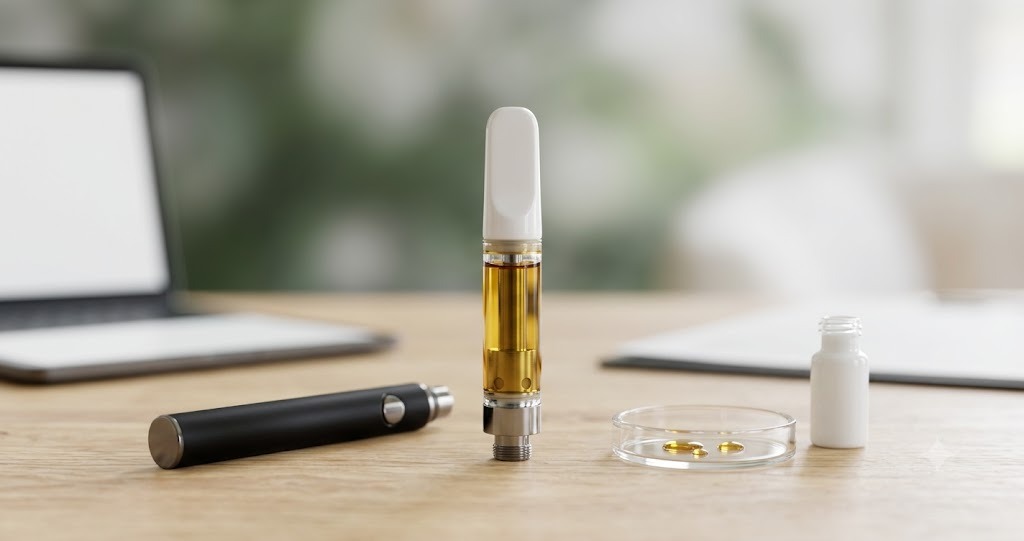
The baseline hardware powering standard cartridges relies on universal 510-threading, the dominant industry standard for detachable oil vaporizers. This threading allows 1g cartridges to connect to various push-button and draw-activated batteries. However, threading size alone does not guarantee uniform performance, as internal air channels and pin placements vary.
Proper hardware matching requires aligning the physical bottom-pin airflow slots of the cartridge with your battery’s top cap design. Unsealed push-button batteries provide direct airflow channels through the threads, preventing air restriction during longer draws. Standard 510-thread cartridges function best when paired with regulated devices that deliver stable power output under load.
Variable voltage settings dictate your overall vapor density and terpene preservation during heating cycles. Lower settings maintain delicate aromatic profiles, while higher voltage settings produce thicker vapor clouds at the expense of oil longevity. Standard 1g cart hardware features internal ceramic core heating elements that handle heat far better than older cotton-wick designs.
+------------------+-------------------+--------------------+-----------------------+
| Voltage Range    | Vapor Production  | Flavor Profile     | Risk of Coil Damage   |
+------------------+-------------------+--------------------+-----------------------+
| 2.0V - 2.5V      | Light / Thin      | Excellent (Subtle) | Extremely Low         |
| 2.6V - 3.2V      | Balanced / Dense  | High (Full Spectrum)| Low (Optimal Range)   |
| 3.3V - 4.0V+     | Heavy / Very Thick| Degraded / Burnt   | High (Dry Hit Risk)   |
+------------------+-------------------+--------------------+-----------------------+
Operating your device above 3.5V rapidly degrades the internal heating elements, leading to burnt tasting hits and dark oil discoloration around the inlet ports. Maintaining voltage between 2.8V and 3.2V protects both extract integrity and cartridge hardware.
Which Extract Formulations Are Found in Authentic Carts?
Extract choices inside cartridges directly affect viscosity, atomization temperatures, and overall vapor production. Triple-distilled extracts isolate specific target compounds, producing a thick, crystal-clear oil profile. Terpenes are added back post-distillation to recreate distinct strain profiles and lower natural viscosity.
Live resin formulations use fresh-frozen plant material rather than dried curing batches to capture native monoterpenes. This process yields a broader aromatic profile and complex flavor notes that mimic raw botanical flowers. Live resin oils are noticeably darker and react faster to heat fluctuations than refined distillate products.
Melted diamond formulations combine high-purity crystalline compounds with rich botanical terpene blends. These oils require precise thermal management due to higher viscosity and elevated vaporization thresholds. Using low-temperature firing settings prevents dark residue build-up around internal ceramic intake holes.
You can evaluate your extract’s physical stability using a simple room-temperature tilt test. High-viscosity distillate should move slowly when inverted, showing high density and lack of added liquid cut agents. Rapidly sloshing oil indicates heavy dilution or residual solvents, compromising both safety and hardware performance. To learn more about original product lines, check out the main
How Do You Optimize Hardware Performance and Prevent Common Leaks?
Leaking and clogging usually result from thermal expansion, incorrect power inputs, or improper storage habits. Leaving cartridges inside warm vehicles or exposing them to direct sunlight thins the internal extract, forcing liquid down through the ceramic atomizer into the lower airflow chamber. Always store your devices vertically at room temperature to keep oil settled over the intake ports.
Clogs typically occur when residual vapor condensation cools inside the center chimney tube. You can clear minor airflow blockages using these simple steps:
-
Engage your battery’s low-temp preheat mode for 2 to 3 seconds without inhaling.
-
Take a gentle, steady draw until you hear a clear popping sound in the airway.
-
Clean the lower 510 thread connection pin using an isopropyl alcohol cotton swab.
-
Adjust your operating voltage down to prevent fast oil pooling in the atomizer core.
Avoid using sharp metallic objects like paperclips to clear internal chimneys, as this damages internal silicone gaskets and causes permanent leaks. Consistent, gentle draws pull fresh oil evenly into the ceramic core without flooding the heating chamber.
If you observe performance drops, verify your device’s legitimacy using official manufacturer channels. Fake products often use cheap brass internal metals and poorly fitted silicone seals, causing persistent leakage and hardware failures. Reference the official
What Are the Performance Differences Between Standard Carts and Integrated Disposables?
Choosing between traditional 1g 510-thread cartridges and 2g integrated disposable units comes down to portability, battery power, and total oil volume. Threaded cartridges allow you to swap flavors using any compatible 510-thread battery. Integrated units bundle the battery, sensor, and extract reservoir into a single self-contained housing.
Integrated 2g devices feature built-in rechargeable lithium-ion batteries powered by standard USB-C charging ports. These internal batteries maintain fixed voltage output matched to the extract’s specific viscosity, removing manual temperature guesswork. Standard 510 cartridges require user-supplied batteries, offering customizable power ranges for different extract densities.
+-------------------------+--------------------------------+--------------------------------+
| Hardware Feature        | Standard 1g 510 Cartridge      | All-in-One 2g Disposable       |
+-------------------------+--------------------------------+--------------------------------+
| Thread Compatibility    | Universal 510 Threading        | Integrated Unit (No Threads)   |
| Battery Dependency      | Requires External Battery      | Built-in USB-C Rechargeable    |
| Voltage Control         | User Adjustable (2.0V - 4.0V)  | Fixed Internal Tuning          |
| Reservoir Capacity      | 1.0ml / 1000mg                 | 2.0ml / 2000mg                 |
| Airflow System          | Bottom-cap Port Ventilation    | Dual-Intake Anti-Clog Channels |
+-------------------------+--------------------------------+--------------------------------+
Dual-intake airflow design in modern 2g devices reduces clogging over the life of larger oil reservoirs. These integrated devices prevent thermal degradation by tapering power output during prolonged firing cycles. For broader comparisons on consumer hardware variations, explore our
How Can You Verify Authenticity and Identify Fake Hardware?
Counterfeit hardware poses significant risks, including heavy metal exposure, harsh volatile cuts, and unpredictable battery performance. Legitimate products feature dual-layer security verification tools, including custom QR codes and high-visibility holographic seals across outer packaging closures. Scanning the QR code should route directly to an official verification portal rather than an unverified third-party landing page.
Official hardware features precise laser-etched branding on the lower metal collar, crisp alignment on silicone seals, and heavy glass walls. Counterfeit units often show misaligned intake holes, thin plastic reservoirs, and glue residue along the internal seal joints. Review state regulatory advisories like the
Authentic ceramic cores use pure, non-porous formulations that heat oil evenly without dry spots or thermal cracking. Cheap knock-off cartridges utilize low-grade heating elements that leach heavy metals into extracts at elevated operating temperatures. You can learn more about verifying hardware safety by visiting
Frequently Asked Questions
Why does my cartridge taste burnt on low voltage settings?
A burnt taste at low voltages usually indicates a dried ceramic core caused by rapid chain-vaping or an unprimed new cartridge. Always allow a new cartridge to sit upright for 5-10 minutes after opening so extract fully saturates the internal wicking material before your initial draw.
How many hits should a 1g cartridge provide under normal use?
A standard 1g cartridge provides approximately 250 to 300 individual draws when operating at a moderate 2.8V setting with standard 3-second pull durations. Higher voltage settings and extended puff times burn extract much faster, significantly dropping total yield.
Can I recharge my 2g disposable device with a high-speed fast charger?
No, high-wattage fast chargers generate excess current that can damage small internal lithium batteries and overheat sensitive oil chambers. Use standard 5V/1A power blocks or computer USB ports with a basic USB-C cable to ensure safe charging cycles.
Maximizing Your Vape Setup Performance
Mastering this hardware requires matching proper voltage settings, using upright storage practices, and choosing verified authentic products. Operating your devices between 2.8V and 3.2V protects delicate terpene profiles, prevents ceramic core burnout, and keeps oil flowing smoothly. Store your hardware vertically in cool, dry environments, clear airway clogs gently using preheat cycles, and scan all QR codes upon opening to ensure safety. Check out our